
Walk into the Room: How Nanna Munkholm Found Her Place in Tech and Is Helping Others Do the Same
Nanna Munkholm did not grow up dreaming of a career in tech. She found her way into the industry through a love of creating, a curiosity for what technology could build and a willingness to step into rooms where she did not always feel like the obvious fit. Today, she is co-founder and CTO of Roccai, a SaaS platform that lets companies guide customers to the right product or service and collect preference data along the way.
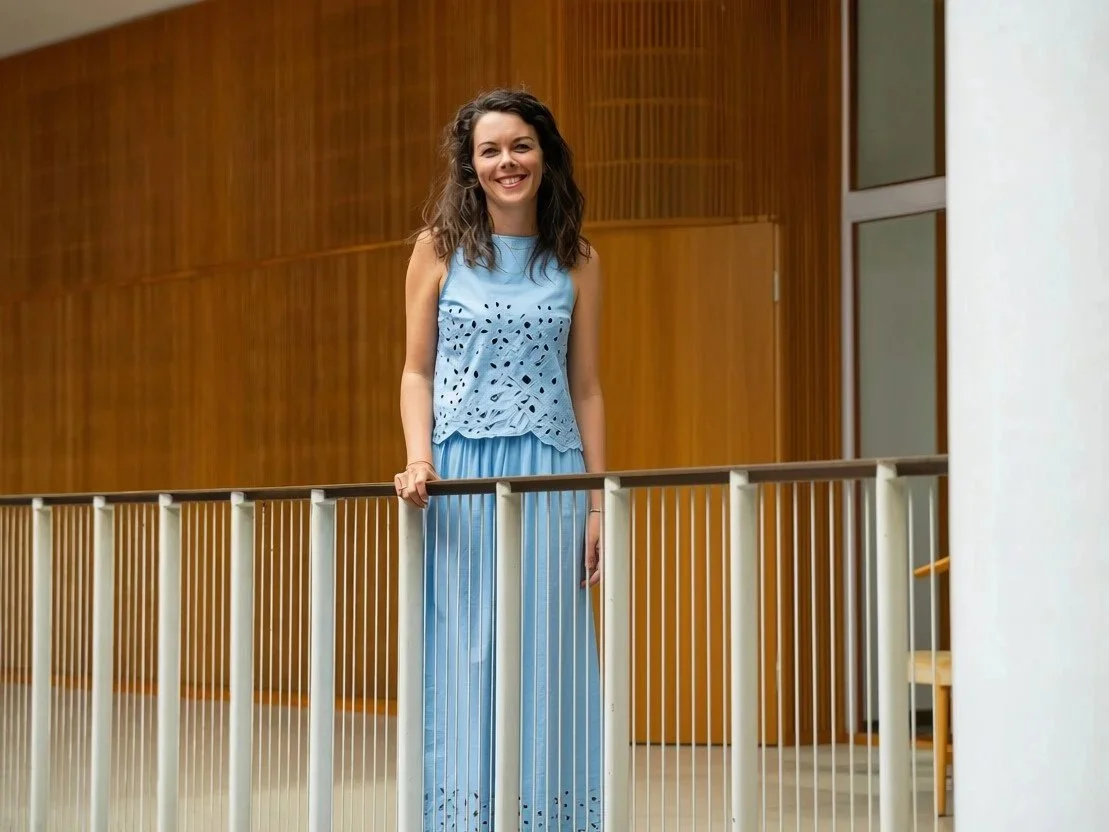
Nanna Munkholm is co-founder and CTO of Roccai.
Creativity, Problem Solving, Balance and Community are keywords in her everyday work.
Creating Something from Nothing
Nanna was never the kid who spent hours behind a computer. She had one, sure. She played The Sims. But that was about it.
Instead, she was drawn to creating things with her hands. She made bags, embroidered clothes and once fell in love with a cushion covered in African animals. It cost 400 DKK, and Nanna remembers thinking: I could make that myself.
So, she did.
She embroidered her own version and later started selling things she made. But it was never the marketing that excited her most. It was creating the product itself.
Years later, she discovered that coding gave her much of the same feeling.
“It’s that feeling of creating something and ending up with a finished product.”
I imagine many of us who love creating things can recognise what Nanna is describing. There’s something satisfying about watching something take shape and figuring out how to fix it when it goes wrong. For Nanna, coding became another way of creating.
“It’s that feeling of creating something and ending up
with a finished product.”
Finding Her Way into Tech
Nanna originally trained as a civil engineer, and it was during her studies that technology began to grab her attention. Through Startup Factory, an entrepreneurship programme, she met developers and saw what they were able to create.
That sparked something.
She learned to code and eventually launched her first tech company, DecorRaid. The concept was, as Nanna describes it with a playful smirk, a bit like Tinder for furniture. Users could swipe through furniture to discover their personal style.
The company eventually closed when Nanna was unable to raise the funding needed to continue.
At the time, it felt like the world was ending. Spoiler: it wasn't.
She took another job, realised it was not where she wanted to be and found her way back to startups. Through the Female Founders and Creators community in Aarhus, she met her future co-founders at Roccai. Once again, a network helped open the next door.
At Roccai, that instinct to build remains central to Nanna’s work. But as the company has grown, so has her role. Being CTO is increasingly about creating the team and space that allow others to build with her.
Learning to let Go
Building a company has also meant learning that creating something does not mean doing everything yourself. That became particularly clear when Nanna fell ill for a longer period. Suddenly, the company could not depend on her in the same way.
“I want employees to challenge me. To tell me no if they disagree
and bring their own expertise.”
Responsibilities were distributed across the team, with employees given their own areas to take ownership of. For the first time, Nanna could go on holiday without her computer.
The experience shaped the way she thinks about leadership.
“I want employees to challenge me. To tell me no if they disagree and bring their own expertise.”
She wants people around her to feel safe enough to make mistakes, disagree and trust their abilities. And when it comes to women in tech, she believes confidence and support can make a real difference.
“I think many women are perfectionists and maybe overthink things a little. That’s why having a community around you and people who believe in you can mean so much,” she tells me.
Walk into the Room
Nanna knows the feeling of entering a space without having the background traditionally expected.
Today, she regularly speaks at tech events, but she still sees how difficult it can be to get more women onto technical stages, particularly in Aarhus.
“There aren’t that many women in tech in Aarhus, especially women working in very technical roles. So often, it ends up being the same few women on stage,” she tells me.
The problem is not a lack of talented women. Sometimes, it is about convincing them that they are ready to take the microphone. It is something I recognise too. I tell Nanna how easily we can convince ourselves that we need to know everything before we raise our hand, step onto a stage or simply say: I can do this.
Nanna doesn't hesitate: “Sometimes you just have to fake it till you make it.”
“Sometimes you just have to fake it till you make it.”
Go to the event even if you are unsure whether you belong there. Walk into the room. Listen. Ask questions. Learn. And act like you belong.
Networks have played a central role in Nanna doing exactly that. She talks about her co-founders, her CTO network and the people she has reached out to for advice.
When I ask what advice she would give a young woman entering tech, she does not start with coding skills or degrees.
“Build a network. Find people around you who support you and cheer you on.”
Success, But Not at Any Cost
Taking up space in tech has also meant deciding what success should look like on her own terms.
“I want to be successful, but I don’t want to work 80 hours a week to get there.”
That became particularly relevant when Nanna became a mother while building Roccai and raising funding.
Roccai has three female founders. One gave birth shortly after their first investment round, while Nanna gave birth a month before the next round. During her pregnancy, Nanna stopped sharing much of her personal life online because they had decided to keep the pregnancies private while fundraising.
Behind that decision was a difficult question: Would an investor see the pregnancy before they saw the founder and the business?
The experience reinforced something Nanna is clear about today. Family comes first.
Yes, she wants to build something ambitious. Just not at the expense of everything outside it.
“I want to be successful, but I don’t want to work 80 hours
a week to get there.”
From Entering the Room to Opening it for Others
When I first reached out to Nanna, I saw someone whose story belonged with the Women in Tech Denmark community. A stand-out profile and a woman who had found her own way into tech.
Neither of us knew that she would soon become part of Women in Tech Denmark in a completely different way.
Towards the end of our conversation, we start talking about Aarhus. Nanna would love to see Women in Tech Denmark have a stronger presence there. We talk about the women already working in tech across the city and creating communities where they can meet, learn and take up space.
Since our conversation, Nanna has joined the Board of Women in Tech Denmark.
The two things were never part of the same plan. But there is something fitting about the way they have ended up meeting here.
Nanna found her way into tech by creating, experimenting, asking questions and surrounding herself with people who helped her move forward. She walked into rooms before she necessarily felt like the obvious person to be there.
Now, as part of Women in Tech Denmark, she has the chance to help create more of those rooms for others, not least in Aarhus.
Because the more we talk, the clearer one thing becomes: there is no shortage of talented women in tech. Sometimes, what is missing is the confidence to step forward, a network encouraging you or simply the feeling that you belong.
Nanna’s story is a reminder that you do not have to wait for that feeling.
Sometimes, you just have to walk into the room.
Women In Tech Denmark work to inspire more women to build businesses or to choose a career in the tech industry. Follow us, to be part of our growing community of women.