
When Shayma Yassen began her engineering studies, she found herself surrounded by people she could not see herself reflected in. Today, she works as a Senior IT Security GRC Manager at TORM, with years of experience across cyber risk, governance and resilience. But while the industry has evolved, the need for greater representation remains.
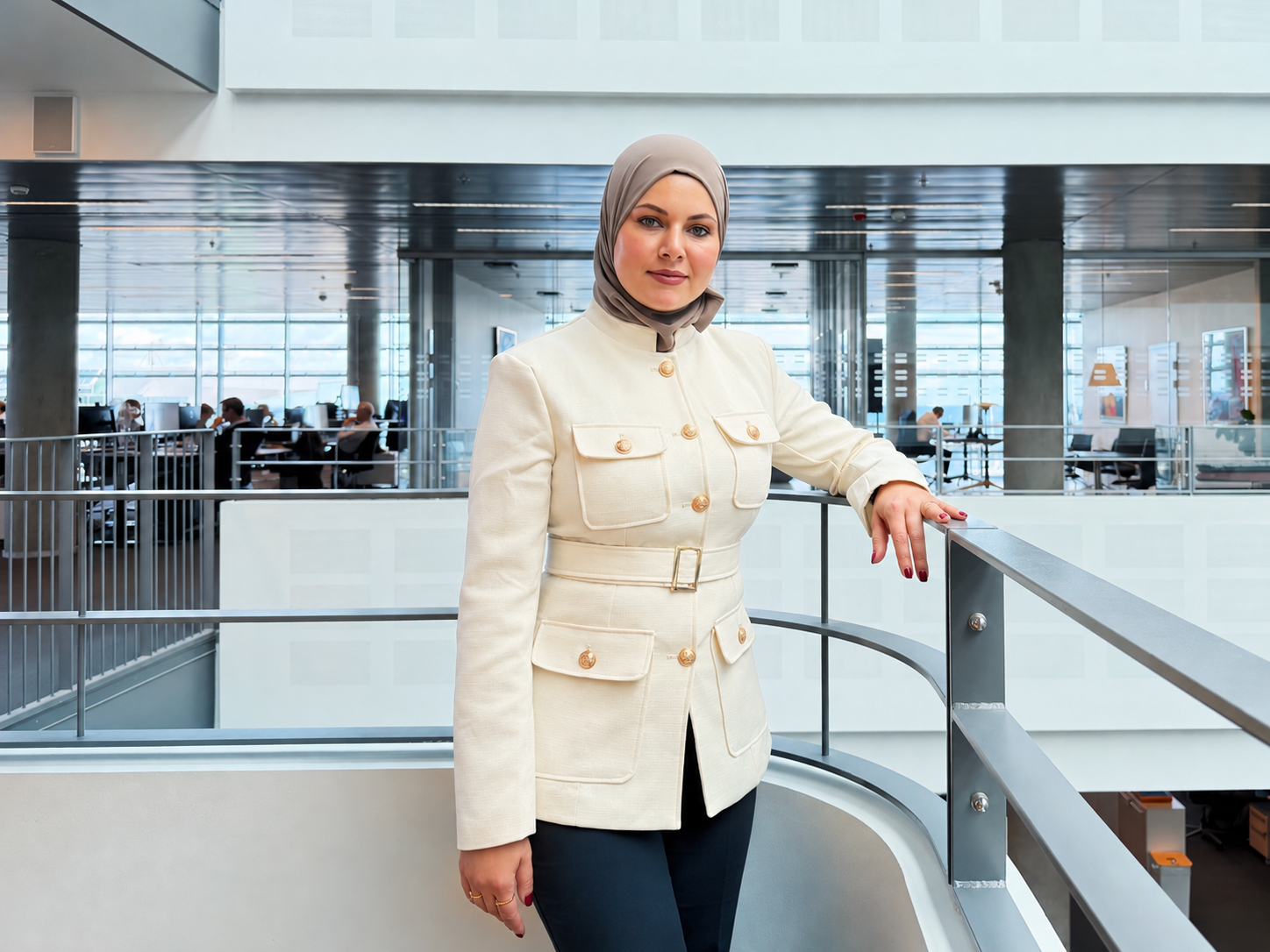
Shayma Yassen works as Senior IT Security GRC Manager at TORM.
Representation, Resilience, Curiosity and Empowerment are keywords for Shayma.
Meet Shayma on LinkedIn
When Standing Out Became Part of Her Journey
Shayma has a thoughtful way of telling me her story. She does not describe her career as a series of carefully planned decisions, but rather as a journey shaped by curiosity, opportunities and a willingness to explore new paths.
Entering the world of engineering, Shayma quickly realised that she was stepping into a field where she rarely saw anyone with a background like her own. When I ask her whether she had someone to look up to during those early years, her answer comes quickly.
“No one really looked like me, and when women were actually invited to give lectures, even they looked nothing like me,” she explains.
For Shayma, it was not simply about seeing more women in technology. She was missing women with cultural or minority backgrounds like her own in visible positions. Someone who could make it easier to imagine herself in the same place one day.
At the time, she had little insight into what a career in technology would look like. Her interest was rooted in the connection between people and technology and in how solutions can be designed around the way humans think and behave.
Listening to Shayma talk about technology, it becomes clear that her fascination has never been technology for technology’s sake. She has always been interested in what happens when technology becomes part of people’s everyday lives and is shaped around the people who use it.
Growing up in a family where education was highly valued, Shayma also learned early on the importance of creating opportunities through hard work and determination.
“In my family, education is very important. You can choose whatever you want, but you must have an education,” she says.
Finding a Passion in Cybersecurity
When I ask Shayma whether cybersecurity was always the goal, her answer is surprisingly simple:
“Not at all.”
Cybersecurity was not part of a fixed career plan from the beginning. But as Shayma became more exposed to the field, curiosity turned into genuine interest and eventually into a clear professional direction.
After completing her studies, she began exploring different paths within technology and took on a freelance role as a consultant at NNIT. Working across projects and industries gave her a broad understanding of how organisations approach technology and risk.
“I think a lot of my career has been about taking the opportunities that came my way and learning as I went along,” she says.
But taking opportunities did not mean leaving her career to chance. As her experience grew, Shayma increasingly chose to develop within cyber risk, governance, resilience, business continuity and crisis preparedness.
That direction became even clearer when her journey brought her to Deloitte and the field of cyber resilience. Here, she worked with larger organisations and more complex challenges, helping businesses understand both how to protect themselves and how to keep operating when something unexpected happens.
Over time, cybersecurity became more than an interesting field. It became the area she wanted to build her career in.
Her engagement has also extended beyond her day-to-day roles. Shayma has been active in initiatives including the IDA Cybersecurity Expert Group and Cybersikkerhedsrådet (The Danish Resilience Agency), contributing to conversations about cybersecurity beyond the organisations she has worked for.
After years of consulting, her move to TORM marked another shift. Rather than advising organisations from the outside, she wanted greater long-term ownership and the opportunity to follow cybersecurity efforts over time.
Today, as Senior IT Security GRC Manager at TORM, she works at the intersection between cybersecurity, governance and the business.
Building Resilience in an Unpredictable Digital World
For Shayma, cybersecurity is ultimately about being prepared for the unexpected. Not because organisations can prevent every threat, but because they need to understand what is at stake and know how to respond when challenges arise.
Much of her work revolves around resilience: understanding vulnerabilities, preparing for crises and ensuring organisations know how to respond when critical systems are affected.
As Shayma puts it:
“The question is no longer whether a company will experience a cyber threat, but when.”
But understanding a cyber risk is not enough. An important part of Shayma’s work is translating complex risks into something decision-makers can understand and act on.
Instead of describing a vulnerability only in technical terms, that can mean putting it into a business context: What happens if a critical system becomes unavailable? Which parts of the organisation are affected? And what decisions need to be made before a crisis occurs?
It is in that translation that cybersecurity becomes relevant beyond the security team.
For Shayma, security is a shared responsibility. It depends not only on technical specialists, but on people across an organisation understanding the choices they make, and the risks connected to them.
What continues to fascinate her about the field is that it never stands still. Risks constantly change, and new technologies reshape both the opportunities and challenges within cybersecurity. Artificial intelligence is a clear example. While AI can strengthen security, it is also being used by increasingly sophisticated attackers.
Staying ahead requires technical knowledge, but also curiosity, adaptability and a willingness to keep learning.
Creating the Representation She Once Looked For
Looking back at the beginning of her journey, Shayma remembers how rarely she saw women with backgrounds like her own in visible positions in technology.
Today, she knows that her own presence in the industry can make a difference for others trying to imagine where they might belong.
Throughout her career, she has met younger women who look up to her, something she describes as an inspiration in itself. For Shayma, representation is not only about seeing more women enter tech. It is also about seeing women from different backgrounds take on roles where they can influence decisions and shape the future of the industry.
“I would have loved to have had a female role model who looked like me in a leadership position. Someone who had already paved the way and showed me that there was room for someone like me,” she expresses.
But creating change does not only happen within companies.
Through her own initiative, CyberAtlasHQ, Shayma wants to make cybersecurity easier to understand for people who do not work professionally with technology. Rather than starting with technical terminology, the initiative uses situations people already recognise from everyday life to explain how cyber risks affect them.
A child losing access to a gaming account. Someone falling for a scam message. An online account being taken over.
These are everyday examples of how digital risks already affect people outside the cybersecurity industry. By making those connections visible, Shayma hopes CyberAtlasHQ can make the field feel less distant and more accessible, including for younger generations.
For Shayma, the future of technology depends on more people feeling that they can be part of it. And her advice to young women considering a career in tech is simple:
“Believe in yourself, take the opportunities that come your way and keep learning along the way.”
As our conversation comes to an end, I find myself thinking back to the young engineering student who entered a field where she struggled to find women with backgrounds similar to her own in visible positions.
Today, Shayma has built a career in cybersecurity through curiosity, deliberate choices and a desire to keep developing her expertise. Along the way, she has also become the kind of visible profile she once searched for herself.
Because representation is not only about being seen. It is also about showing what experience, expertise and different perspectives can bring to the room.
Women In Tech Denmark work to inspire more women to build businesses or to choose a career in the tech industry. Follow us, to be part of our growing community of women.